
Key Takeaway:
Understand some of the ways that AI is changing digital advertising.
Know some of the different ad types available in Google’s “Power Pack”.
Gain some tips for strengthening your digital ads in the age of AI, as digital ad platforms increasingly offer smarter features for greater personalization.
Digital advertising is undergoing a massive shift—and AI is driving the change. Here are a few things retail business owners like you should know to stay ahead.
Google’s AI-Powered Ad Suite Is Getting Smarter (and Small Business Accessible)
The tools you use to run digital ads are changing fast and AI is at the center of it all. Google, for instance, now centers its entire strategy around what they call the “Power Pack”: Performance Max (PMax), AI Max for Search, and Demand Gen. These campaigns aren’t just cross-platform; they’re getting better at understanding your customers and matching your ads to the right audience with minimal manual input. Here’s what you should know about the Power Pack.
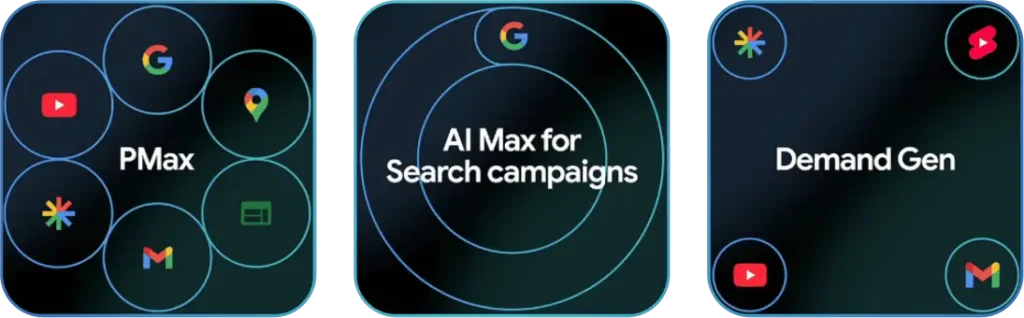
The 3 Members of Google’s Power Pack
PMax
PMax campaigns let your ads appear across YouTube, Gmail, Google Search, and more – all optimized by AI to drive conversions. Whether you’re booking custom design appointments or promoting new product launches, PMax uses your creative assets and first-party data to connect with the right shoppers.
AI Max
AI Max for Search takes things a step further, using real-time search intent to adapt your headlines, descriptions, and even landing pages. These ads don’t just match keywords. They evaluate what people mean when they search and tailor the experience accordingly.
Demand Gen
Demand Gen ads are visually compelling, multi-format advertisements displayed across Google’s most immersive platforms, including YouTube, YouTube Shorts, Discover, and Gmail. There is now increased integration with Google Merchant Center, enabling users to browse products directly within these ads, a feature similar to Meta Ads‘ shoppable advertisements. And these ads offer more advanced reporting capabilities, providing insights into brand lift, search lift, and conversion lift.
A New Customer Matching Threshold
This shift isn’t just for big brands. Tools like Google Customer Match now have a lower threshold of 100 users (whereas it was previously a minimum of 1,000 users), so smaller businesses can finally use their own online and offline data to create personalized retargeting ads. That means you can upload a list of VIP customers or recent in-store buyers. And Google will help you find lookalike shoppers across its platforms.
Creative is Changing:
Think Shoppable, Searchable, and Streamable
If your digital ads haven’t been updated in a while, now’s the time to rethink your content strategy. Because today’s ad platforms want visuals that do more than look good. They need to inform, inspire, and invite action.
Shoppable Ads Are Expanding Across Google
Demand Gen campaigns are Google’s answer to immersive, multi-format ads. These appear across YouTube, Gmail, Discover, and Shorts. And with built-in Google Merchant Center integration, your products can now appear right inside the ad, ready to shop. It’s a lot like Meta’s shoppable posts, but with Google’s reach and smarter targeting.
YouTube Is Leading the Shift to Interactive Advertising
According to a recent report from Nielsen, YouTube took the lead over other streaming platforms by watch time. And its digital advertising features continue to evolve. For instance, brands can run side-by-side ads during livestreams or tap into new influencer marketing tools built directly into Google Ads. These updates mark a shift in how influencer partnerships are used—not just for building awareness, but for driving actual conversions.
“Want a tip to find a good influencer for your brand? Interview them off of core values, to confirm they’re on a similar page and will stay true to your brand’s personality, tone, and purpose.”
– Jennifer Shaheen
President and Founder, Technology Therapy® Group
Influencers: From Awareness to Conversions
The influencer landscape is evolving. Hybrid compensation models, like performance-based commission rates or revenue shares, are replacing the traditional flat-fee model. For small businesses, this shift makes influencer partnerships more affordable and outcome-focused. Not sure where to start? Platforms like Social Cat help you find aligned creators who can drive real results.
AI Is Powering Smarter, More Adaptive Creative
It’s not just about producing more content, but it’s about making content that adapts. With AI, your creative can now morph in real time to match a user’s search intent or engagement pattern. That said, quality inputs still matter: strong visuals, authentic messaging, and landing pages that reflect what your customer actually wants.
“Don’t forget to use customer mirroring to improve your ad content. I recommend pulling out the exact phrases used in your best reviews, then using this in your ad copy and on your landing pages.”
– Jennifer Shaheen
President and Founder, Technology Therapy® Group
It’s Still About the Story:
Strategy, Testing & Brand Alignment Matter
Even with AI doing more of the heavy lifting, success still comes down to smart planning and storytelling. AI can optimize your ads – but only if it’s working with the right strategy and clear goals.
Plan with Purpose
We recommend organizing your ad campaigns into three categories: evergreen, event-driven, and holiday-focused. And keep in mind that each needs time to learn and improve. So, map them out early, especially if you’re gearing up for the Q4 rush.
Test, Learn, Refine
Don’t just set your ads and forget them. Monitor what’s working, whether it’s a headline, an audience segment, or a placement. Then use those insights to refresh content, adjust targeting, or improve landing pages.
Stay True to Your Brand
AI can generate creative, but it’s up to you to ensure it reflects your tone, values, and visual identity. Whether you’re launching influencer partnerships or testing new formats, keep your brand story front and center.
Using AI to Enhance (Not Replace) Your Voice in Digital Advertising
AI is shaping the future of digital advertising. While this future might sound intimidating, it’s actually a win for small retailers with limited time or internal resources. You’ll still need a clear strategy, but the heavy lifting of testing and targeting is increasingly being handled by smart AI.
But rather than replacing your creativity, it’s here to support it. You can now automate the tedious parts, sharpen your targeting, and focus on what you do best: connecting with your customers.
Get a Fresh Look at Your Ad Performance
Let us evaluate your Google and Meta ad performance, from setup to tracking. Get the insights you need to confidently enhance your digital advertising.