
Key Takeaway:
Finally get answers to some of your most pressing questions about email marketing.
During a recent email marketing webinar, we received a plethora of thoughtful questions from business owners who are actively trying to improve how they use email. Join us as we review 10 of the most common attendee questions and share answers directly from the webinar. (Get ready to boost your retailer store’s email marketing results!)
1. What kinds of questions should I ask contacts for better segmentation?
The short answer is: it depends on your business and what you’re trying to accomplish. Segmentation isn’t something you do just for the sake of it—it should support both the customer experience and what you’re trying to sell. For example, if you’re a coffee shop, you might ask whether someone prefers light, medium, or dark roast. If you’re a jewelry store, you might ask your customers what their favorite metals or gemstones are.
The key is to think about what information will actually help you personalize messaging and offers. Sometimes segmentation can even be based on age or generation. However, instead of directly asking age, you might ask something like a preferred social media platform. That single question can reveal a lot about how someone wants to communicate and what type of content will resonate.
Bottom line? The questions you ask should align with what you’re trying to learn about your audience and what you’re trying to sell.
“Segmentation isn’t something you do just for the sake of it — it should support both the customer experience and what you’re trying to sell.”
– Technology Therapy® Group
2. How do you recommend cleaning a subscriber email list?
A good place to start is engagement. If you send emails weekly, one common approach is to identify people who haven’t opened an email in six months. That could mean they’ve ignored 20+ emails, which is a strong signal. Start by segmenting out subscribers who haven’t opened anything at all.
From there, look at the people who are engaged and consider what additional data you have. Can you segment by past purchases, product views, or browsing behavior? Most platforms provide some insight into how people joined your list or what they’ve interacted with. But it’s best to focus on behavior you can confidently use.
Segmentation also works both ways. You can target people with content related to what they’ve already shown interest in, or you can introduce something new to people who haven’t explored a certain product yet. Start with removing non-openers, then drill down into the behavior of engaged contacts to create more meaningful groupings.
3. How can I generally improve email open rates?
One of the most effective places to start is your subject lines. Look back at the last six months of emails and identify which messages had higher open rates (even if they weren’t perfect). What stood out about those subject lines? Did they include a question, an emoji, or a more conversational tone?
Use those patterns going forward, but don’t overdo it. Variety still matters. Another helpful tactic is running a re-engagement campaign. This could take the form of a “we miss you” email that has a clear incentive and an option to opt out. After that, consider excluding people who don’t engage so you’re focusing on subscribers who actually want to hear from you.
4. Besides discounts, what other incentives work for email signups?
Discounts are worth testing, especially if you’ve only tried one format or one percentage. Sometimes it’s not that discounts don’t work—it’s that the offer wasn’t compelling enough.
If discounts truly aren’t effective for your audience, try value-based incentives instead. Examples include VIP access, early announcements for events or launches, or exclusive content. If you’re an apparel shop, that might look like a downloadable on how to style an accent scarf. The goal is to offer something genuinely useful or appealing in exchange for an email address.
“When emails try to do too much, the main message gets lost. One clear purpose per email helps reduce confusion and sets better expectations for your audience.”
– Technology Therapy® Group
5. What does “one message per email” actually mean?
It means focusing on one primary goal per email. Consider an email that includes a holiday closure notice, a free video, and a CTA about one of your services – those are three different messages competing for attention. If the most important thing is letting customers know you’ll be closed for a holiday, that should be the sole focus of that email.
When emails try to do too much, the main message gets lost. One clear purpose per email helps reduce confusion and sets better expectations for your audience.
6. What is an A/B test (for email)?
An A/B test for email marketing (also called split testing) is a simple way to compare two versions of an email to see which one performs better. You send version A to one group and version B to another, changing just one element (like the subject line, image, or call to action). Next, measure results such as opens or clicks. Think of it like putting two versions of a product display in your store window and seeing which one draws more people inside.
The key is to test one change at a time, so the results are clear. Choose what you want to improve, let the data do the talking, and use what you learn to guide future emails. Over time, A/B testing will help you make smarter decisions about what resonates with your audience, so you’re not shooting in the dark when sending emails.
7. Are emojis in the subject line good or bad?
Per data from Klaviyo, 43.5% of SMBs use emojis in their subject lines. Emojis in subject lines can be effective when they’re used thoughtfully. They can help an email stand out in a crowded inbox or add a bit of personality when they naturally support the message. That said, using too many (or using them without clear intent) can distract from what you’re saying.
Whether emojis make sense often comes down to your audience and your brand voice. If your customers skew younger or are comfortable with casual, text-style communication, emojis may feel familiar and engaging. For audiences that expect a more traditional tone, using fewer (or none at all) may feel more on-brand. As with many email tactics, it’s less about following a rule and more about paying attention to what resonates with your subscribers.
To determine whether emojis resonate with your audience, test them. Create an A/B test using the same subject line copy—one version with an emoji and one without. Over time, your data will tell you whether emojis improve open rates or add unnecessary noise. If performance improves, keep using them intentionally. If it doesn’t, stick with emoji-free subject lines. The goal isn’t to follow a trend—it’s to follow what your subscribers respond to.
8. Is email marketing effective in comparison to other forms of marketing?
Still on the fence about whether email marketing is worth prioritizing? Here are some recent stats:
- In 2025, nearly 5 billion people used email. This number is forecasted to surpass 4.8 billion by 2027.
- For every $1 spent on email marketing, the average return is $36, delivering a 3600% ROI.
- 59% of consumers say marketing emails impact their buying decisions.
- Automated emails generate 37% of orders from just 2% of total sends
Email isn’t the only channel worth investing in for your retail business. But it’s definitely one you don’t want to neglect given the high rate of email users and how much influence it has on consumers’ purchases.
“One of the most effective ways to reduce deliverability issues is to be proactive. Weeding out phrases or words that spam filters commonly pick up on before you send can go a long way toward improving results.”
– Technology Therapy® Group
9. Is there a way to tell what emails are going into people’s junk or spam boxes?
There isn’t a single, perfect way to see exactly which inbox an email lands in for every subscriber. But there are tools that can help you assess deliverability. Tools like Unspam allow you to test emails before sending to see how they perform against common spam filters. Platforms like Klaviyo also provide a deliverability score at the account level. This can help you predict whether your emails are more likely to reach inboxes or get flagged.
That said, one of the most effective ways to reduce deliverability issues is to be proactive. Weeding out phrases or words that spam filters commonly pick up on before you send can go a long way toward improving results. Paying attention to language, formatting, and sending habits often helps you avoid problems altogether. (Read this blog to learn more.)
10. What features do you value when selecting an email marking platform?
When selecting an email marketing platform, we look for tools that make it easier for retailers to send product-focused emails designed to sell. Integration with platforms like Shopify, WooCommerce, and others is important, as it allows you to easily pull in products and build campaigns without extra work. We also value advanced user tracking that helps analyze behavior both within emails and on your website, along with strong segmentation capabilities so messages can feel more personalized and relevant.
Operational features matter just as much. Easy list cleaning tools, professional templates, and a drag-and-drop email and form builder help teams stay efficient and consistent. We also look for platforms that allow you to track form submissions in Google Analytics — something not all systems support. Being able to redirect forms to a thank-you page makes a big difference when it comes to measuring performance.
Klaviyo* checks many of these boxes. That’s why it’s our #1 recommendation for our retail business clients here at TTG.
Start Building Better Email Campaigns for Retail
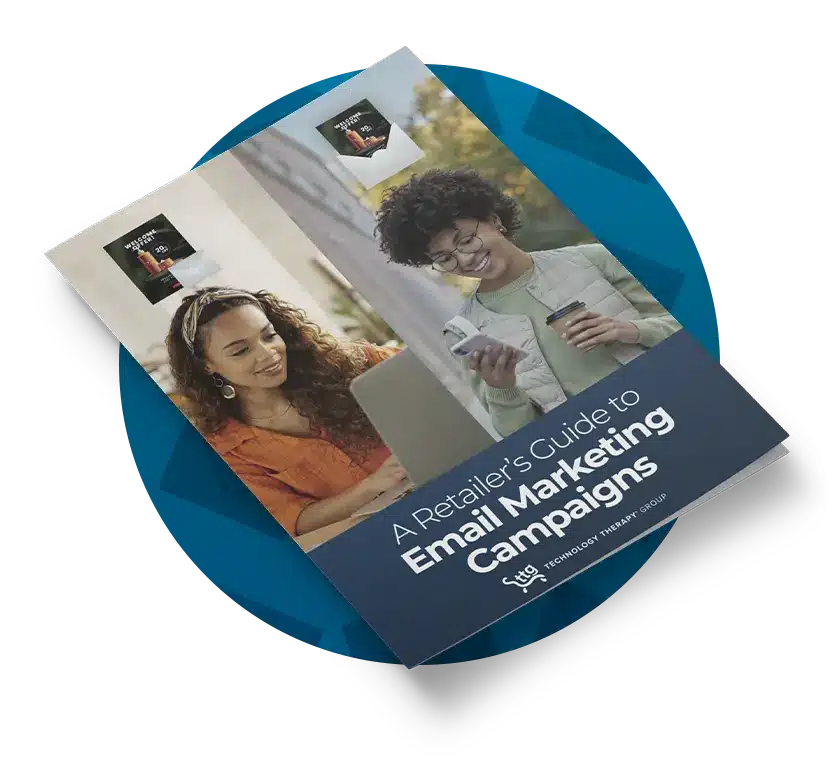
Want a clearer, more strategic approach to email marketing? Download our FREE guide to email campaigns for retailers and start planning emails that lift your growth, engagement, and sales.
*DISCLOSURE: Links included in this article might be affiliate links. If you purchase a product or service with the links that we provide, TTG may receive a small commission. There is no additional charge to you!