


Key Takeaways:
Holiday shoppers are already managing financial stress, gift-giving pressure, and competing responsibilities.
Unclear deadlines, stock availability, and pickup options can add unnecessary frustration to the shopping experience.
Make essential holiday shopping information easy to find across your website, social media, and other customer touchpoints.
Proactively communicate timelines, fees, and purchasing options to help customers shop with confidence.
Holiday shopping comes with enough decisions already. When customers can’t easily find shipping cutoff dates, confirm whether a product is in stock, or figure out if they can buy online and pick up in store, even a simple purchase can become frustrating.
These seemingly small obstacles can create unnecessary stress and hesitation, especially during a season when shoppers are already juggling competing demands.
What’s Adding to Holiday Shopping Stress?
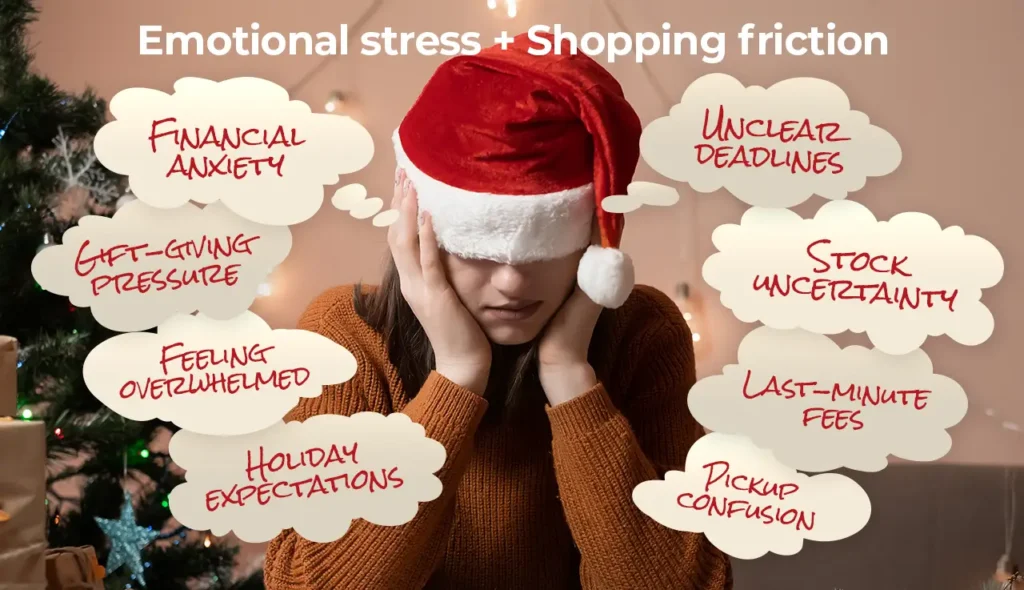
Shoppers Are Already Carrying Stress Into the Holidays
For many consumers, the holiday season is adding another layer of responsibility to an already stressful year. According to the American Psychological Association’s 2026 Stress in America report, 77% of U.S. adults identified the cost of living as a significant source of stress.
And financial concerns aren’t the only pressure. Omnisend’s 2026 Holiday Shopping Study found that 50% of U.S. respondents felt significantly more stressed about holiday hosting than the previous year. Meanwhile, recent LifeStance Health research found that 69% felt at least some pressure to appear happier than they actually were during the holidays.
Between financial worries, family obligations, and expectations to make the season special, 2026 holiday shoppers may already feel stretched thin before they begin checking gifts off their lists.
Holiday Gift Shopping Adds Another Layer of Pressure
Gift shopping brings its own financial and emotional challenges. EY-Parthenon’s 2026 consumer research found that 42% of consumers felt more stressed about affording holiday gifts than the previous year, yet 81% still planned to buy gifts for approximately the same number of people or more.
But the pressure goes beyond budgets. Deloitte’s 2026 Holiday Retail Survey found that 44% of surveyed U.S. consumers consider gift shopping stressful. Choosing the right gift can carry emotional weight, especially when shopping for someone close to you. There’s the added pressure of finding something that reflects how well you know the recipient. In the psychology world, this is referred to as “gift-giving anxiety”: the fear that choosing the wrong gift might suggest you don’t understand their tastes or preferences as well as you thought. (And as helpful as AI shopping tools are, they still can’t totally erase this pressure for today’s shoppers.)
For retailers, these findings highlight an important opportunity: When customers are already juggling financial concerns, holiday obligations, and the desire to find meaningful gifts, your business can help make shopping one less thing they have to worry about.
That’s where reducing holiday shopper friction comes in.
“Make it easy for customers to find the information they need without adding extra steps to their shopping experience.“
– Technology Therapy®️ Group
Meet Holiday Shoppers Where They Are
Shoppers don’t always have the time or patience to search through multiple pages, posts, and policies for answers. They might be shopping during a lunch break, comparing gifts between errands, or trying to finish their list before an upcoming gathering.
The easier you make it to find information and complete a purchase, the less work you’re asking customers to do. Meeting shoppers where they are means anticipating their questions and making the answers accessible before frustration sets in.
Make Holiday Deadlines and Extra Costs Clear
Shipping and ordering cutoff dates shouldn’t be difficult to find. Customers need to know when to place an order, how long processing takes, and when a gift is expected to arrive.
This becomes especially important for personalized or custom products. For example, one custom jewelry client we work with charges rush fees for last-minute requests. That’s understandable since custom work takes time, and accommodating a late order may require additional resources.
But procrastination can cost customers more. When they discover an unexpected rush fee late in the buying process, it can make their already stressful situation worse.
4 Holiday Communications Tips
Be proactive about communicating:
- Standard ordering and shipping deadlines
- Customization and production timelines
- Rush-order availability and additional fees
- Last dates for in-store pickup
Customers may still wait until the last minute. But the goal is to help them understand their options and costs before making a decision.
Remove the Guesswork Around Inventory and Pickup
Imagine finding the perfect gift online, only to discover at checkout that it’s unavailable—or realizing you could have picked it up locally instead of paying for expedited shipping. These are avoidable sources of frustration.
When possible, show accurate product availability on your website and make shopping options easy to understand. Can customers purchase online and pick up in store? How soon will an order be ready? Do they need to wait for confirmation before arriving? Put that information on product pages, not just in a general FAQ.
Action Tip: If you’re a small business that offers local pickup, clear instructions and realistic pickup timelines can make a big difference to your shoppers as holiday deadlines approach.
Put Holiday Information Where Customers Are Already Looking
Customers shouldn’t have to search through multiple pages or platforms to find essential holiday shopping details. Make information like ordering deadlines, pickup options, and holiday hours easy to access wherever customers interact with your business.
Start with your social media channels. On Instagram, create a visually clear post highlighting key holiday shopping details and pin it to the top of your profile. This makes important information more accessible instead of burying it several clicks deep in your link-in-bio menu.
If you have a dedicated holiday shopping hub on your website, link to it from your social profiles and email campaigns. Keep deadlines, policies, and other details consistent across channels, and update your Google Business Profile with accurate holiday hours.
The goal is simple: Make it easy for customers to find the information they need without adding extra steps to their shopping experience. (And make your life easier as a retailer with these top holiday marketing automations for 2026.)
Action Tip: On Instagram, create a visually clear post highlighting key holiday shopping details and pin it to the top of your profile.
Make the Next Step Obvious
Sometimes friction isn’t caused by missing information. It’s caused by too much information presented without clear direction.
Review your holiday shopping experience from the customer’s perspective. Can someone quickly find gift ideas by recipient or budget? Are return policies, delivery options, and contact information easy to locate? Is it clear what to do when an item is unavailable?
Curated gift guides, wish lists, helpful product recommendations, and straightforward navigation can make the experience more manageable without requiring customers to sort through everything themselves. Per Deloitte, 74% of shoppers who find gift shopping stressful say that wish lists make the process easier.
“Holiday shoppers may be frustrated with their own procrastination, busy schedules, or growing to-do lists. But when they encounter unclear policies, unexpected costs, or unnecessary obstacles, your business can end up absorbing that frustration.”
– Jennifer Shaheen
President and Founder, Technology Therapy® Group
Less Friction, More Confidence
Holiday shoppers may be frustrated with their own procrastination, busy schedules, or growing to-do lists. But when they encounter unclear policies, unexpected costs, or unnecessary obstacles, your business can end up absorbing that frustration.
You can’t eliminate every source of holiday stress. You can, however, make the shopping experience more predictable, convenient, and reassuring.
Meet customers where they are. Answer their questions before they need to ask, communicate expectations clearly, and make it easier to complete their holiday shopping with confidence.
Find the Friction Points on Your Website
Need an expert review of friction points on your website? Schedule an Interactive Website Audit from Technology Therapy Group.